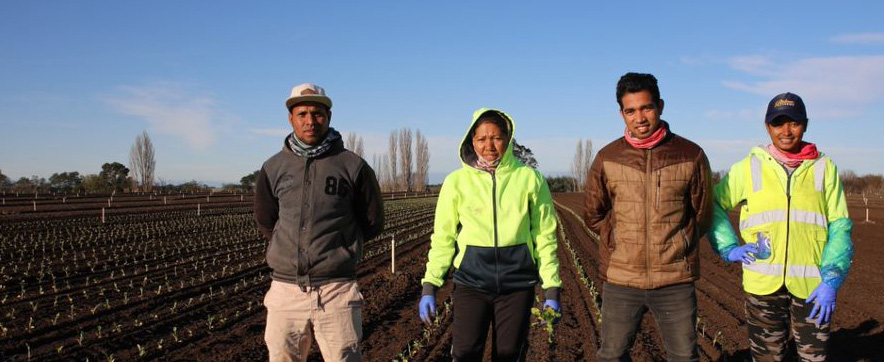
The Pacific Australia Labour Mobility (PALM) scheme Skills Development Program provides funding to help employers deliver training to PALM scheme workers from Pacific Island countries, Timor-Leste and Vietnam while they are employed in Australia.
The program supports a wide range of training, from essential life skills and job specific training to nationally recognised qualifications. It is designed to strengthen workplace skills, improve safety and productivity for employers, and equip workers with valuable capabilities that benefit them during their employment in Australia and upon return to their home communities.
Who can apply?
All PALM scheme employers are eligible to apply for Skills Development funding, including:
- direct employers, and
- host employers engaging workers through labour hire providers.
Employers can apply for funding on behalf of PALM scheme workers.
Training types
Skills development training under the PALM scheme is grouped into four tiers, based on the purpose and level of training provided. This ensures funding is targeted to the right type of support at the right time.
Tier 1: Preparation
Tier 1 training prepares PALM scheme workers for their experience in Australia. It includes essential briefings delivered before departure from their home country and on arrival in Australia.
This training helps workers understand workplace expectations, stay safe, and adapt to living and working in a new environment.
Tier 1 training is delivered by sending countries and employers and is not funded by DEWR.
Tier 2: Employability and life skills
Tier 2 training supports workers to develop essential everyday skills that help them live and work independently in Australia and prepare for reintegration into their home communities.
This may include training in areas such as financial literacy, health and wellbeing, communication, and general workplace skills.
Tier 2 training is generally suited to workers who are new to Australia or who would benefit from foundational life and employability skills.
Tier 3: Job skills
Tier 3 training focuses on building job specific skills that help workers perform their current roles safely and effectively.
This includes training such as equipment or machinery operation, workplace safety, food handling, and other specialised skills relevant to the employer’s business and industry.
Tier 3 training is suited to workers who need additional skills for their current role or to increase their employability in similar roles.
Tier 4: Formal qualifications
Tier 4 training provides workers with nationally recognised qualifications that support long term career development and benefit their communities upon return home.
Tier 4 training is suited to workers seeking structured, accredited training that leads to formal qualifications (up to a Certificate III).
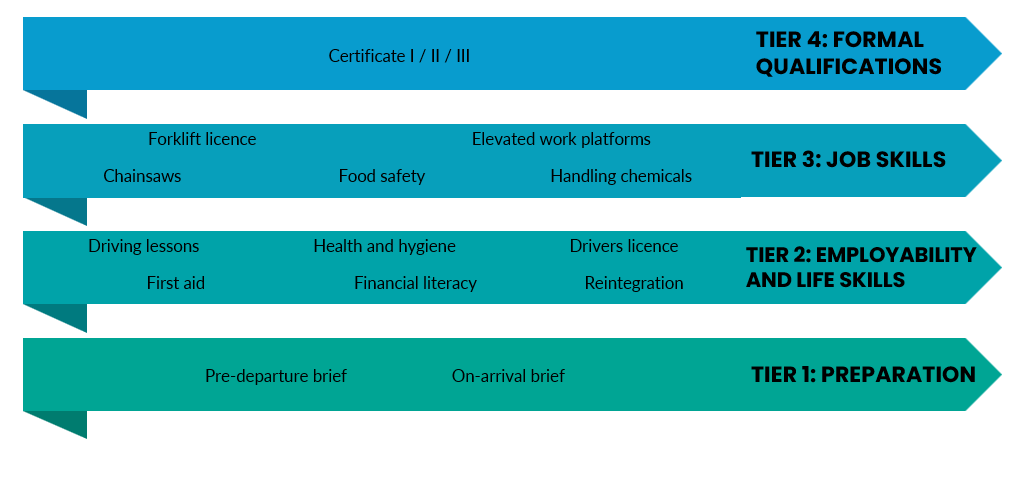
Please note: This is not a complete list of approved training. Alongside recognised programs delivered by Registered Training Organisations (RTOs), employers may develop tailored training to meet specific business needs. Tailored training may fall under Tier 2 or Tier 3, depending on its focus and learning outcomes.
How does funding work?
PALM scheme employers apply for training funding on behalf of their PALM scheme workers. Employers:
- select their preferred training provider
- pay for the training upfront
- submit a reimbursement claim once the training is completed.
If approved, the Department of Employment and Workplace Relations (DEWR) reimburses eligible training costs in line with the relevant funding tier.
Training can include:
- recognised training delivered by a Registered Training Organisation (RTO)
- non accredited training that builds valuable workplace or life skills
- tailored training developed to meet specific business needs (assessed as Tier 2 or Tier 3).
All proposed training must be included in the application and assessed against program criteria. Employers are responsible for sourcing and engaging training providers.
Funding arrangements
The Skills Development Program uses a tiered funding model with shared cost arrangements between employers and DEWR. Contribution rates and annual caps vary by training tier.
| Tier | Funding arrangements |
|---|---|
| Tier 1: Preparation | No DEWR funding (delivered by sending countries and employers). |
| Tier 2: Employability and life skills | DEWR: 100% of costs (up to $600 per worker per year). |
| Tier 3: Job skills | Employer: 40% of costs. DEWR: 60% of costs (up to $600 per worker per year). |
| Tier 4: Formal qualifications | Employer: 50% of costs. Please note: Worker training for formal qualifications should be directly related to the business’ employment requirements and not impact a worker’s average minimum hours. |
How to access training support
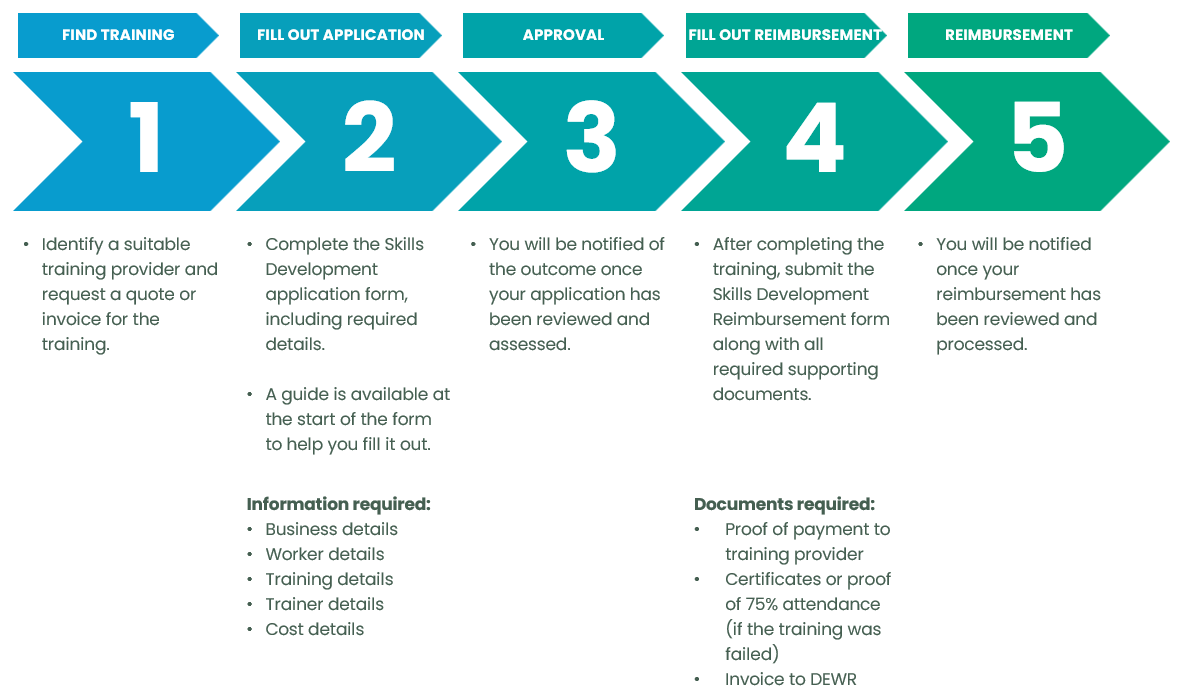
The Skills Development Program supports employers through a simple process of applying for funding, completing training, and then claiming reimbursement.
The process involves:
- identifying appropriate training for PALM scheme workers
- submitting an online application
- completing the approved training
- paying the training provider
- submitting a reimbursement claim with required documentation.
Important information
- Employers must apply for funding on behalf of their PALM scheme workers.
- Employers can choose their preferred training providers.
- Funding is available for both accredited and non-accredited training.
- Employers pay for training upfront and are reimbursed after completion and approval.
- Training that receives other government funding is not eligible.
How to apply
- Apply here: Skills Development Program Application form.
- Reimbursement form: after approval and once the training has been completed, please submit reimbursement documents through the Skills Development Program Reimbursement form.
- Submit early: DEWR recommends applying at least 2 weeks before the training start date to allow time for assessment and approval.
- Notification: employers will receive an email from the DEWR PALM Capability team advising the outcome of their application.
- Unsuccessful applications: employers with unsuccessful applications can request feedback from DEWR to help refine and resubmit an application.
- View frequently asked questions: for answers to common questions about the application process, refer to the frequently asked questions.
- Need help? for more information, please email (PALMcapability@dewr.gov.au).